To Lead
Leadership that shows in the results
From insight to behaviour – from behaviour to results.
We help you develop the leadership your strategy actually requires – and show what it delivered.
The challenge
Does this sound familiar?
Different pictures of good leadership
Operational excellence and HR pull in different directions.
Principles that stay on paper
The leadership principles don't show in everyday decisions.
Culture without connection
The values don't live in the daily work.
Unclear expectations
Managers don't really know what is expected of them.
It is rarely the managers who fall short. More often it is the system around them.
A course rarely changes what happens on Monday morning.
Inspiration without training
The insight is there, but not the ability.
Training without everyday work
What is practised in the classroom never meets reality.
Satisfaction instead of impact
The evaluation says how the course was, not what it delivered.
Our answer
A leadership system in three parts
What
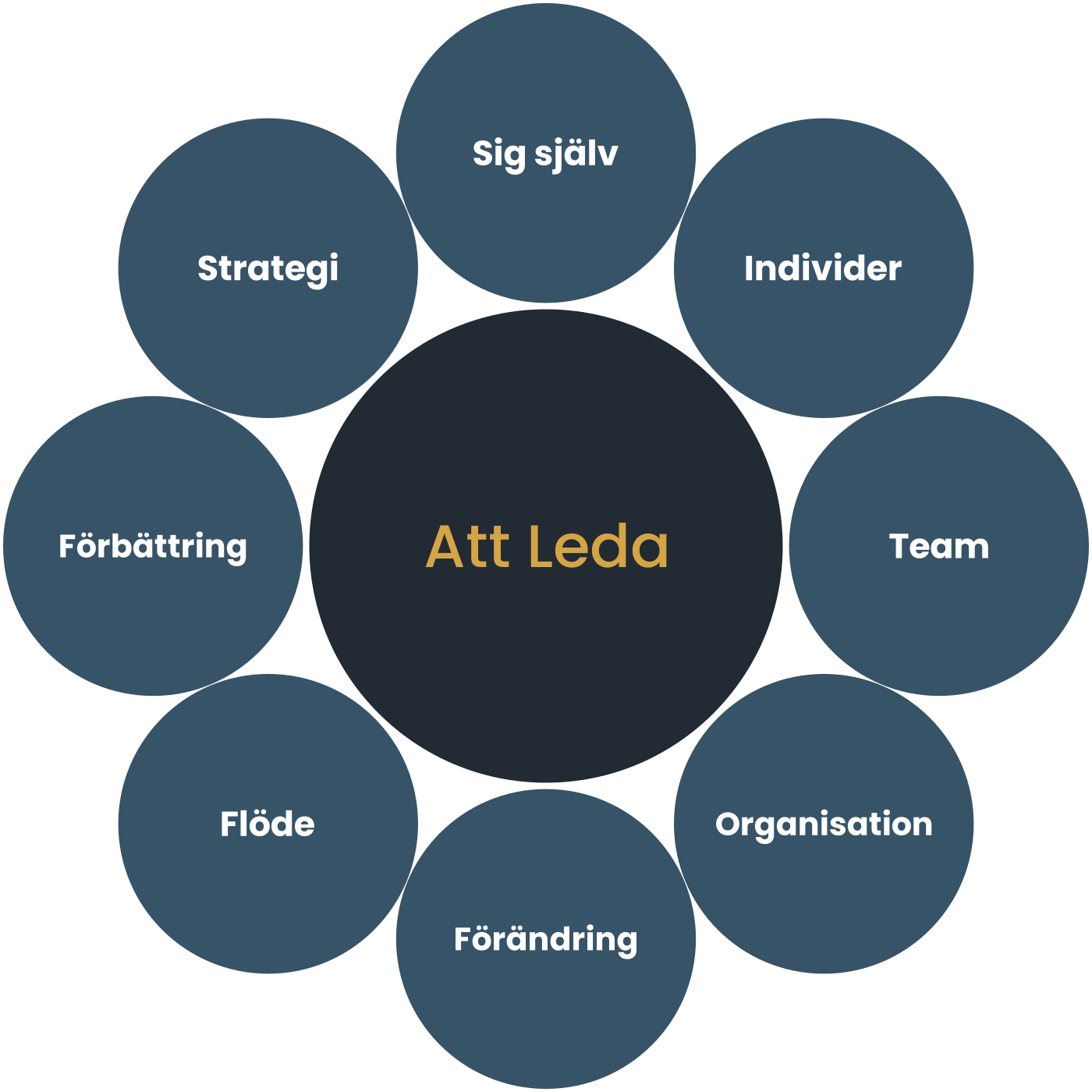
Eight areas
What your leaders need to be able to lead – from themselves to the strategy.
How
The To Lead Spiral
Six steps that turn insight into new behaviour – in real situations.
Why
Results
Better leadership behaviour that shows in teams, the organisation and the business.
To Lead decides what to develop. The spiral decides how. Your goals decide why.
What · Eight areas
All of leadership on one map
Eight perspectives on what a leader needs to be able to lead. Not eight courses.
The map is adapted to your strategy and values – and shows where your gaps are.
How · The To Lead Spiral
Every round ends higher up
- 1MeasureWhere do we stand – in our own eyes and in others'?
- 2UnderstandWhat does the result mean for us?
- 3PrioritiseWhich one or two behaviours make the biggest difference?
- 4TrainHow do we build the ability?
- 5ApplyNew behaviour in real situations.
- 6Reflect and anchorWhat was the effect – and what do we take into the next round?
Illustrative example · Leading change
One round in practice
1 · Measure
The production manager is strong at setting direction but weaker at handling resistance.
2 · Understand
In the coaching conversation it becomes clear: objections are postponed rather than dealt with.
3 · Prioritise
One behaviour: address objections early and openly.
4 · Train
Conversation techniques, role play and coaching on real cases.
5 · Apply
The introduction of a new shift schedule becomes the training ground.
6 · Reflect and anchor
The team and the pulse show whether objections now surface earlier. What works becomes routine – then the next round.
Development happens in the job, not beside it.
Adaptation
The right leadership at the right level
First-line leaders
Focus: individuals, team and flow
Rhythm: day and week
Support: handbook and coaching guide for first-line leaders
Middle managers
Focus: organisation, improvement and change
Rhythm: week and month
Support: handbook and coaching for middle managers
Management team
Focus: strategy, change and oneself
Rhythm: month and quarter
Support: handbook for top managers and management team analysis
And in the right situation: a stable context calls for structure, an uncertain one calls for experiments. To Lead helps leaders tell the difference.
Impact
We measure behaviour and impact – not satisfaction
To Lead Assessment
Current state and gaps in eight areas – as seen by the leader, the employees and the organisation.
Where do we stand?
To Lead Pulse
Five minutes every quarter: are behaviours and team climate changing?
Are we moving?
Business impact
Linked to your KPIs: efficiency, engagement and customer value.
Does it pay off?
You see the development while it is happening – and can show what the investment delivered.
Approach
How an engagement works
Direction
Current-state analysis and a leadership profile linked to your strategy and values.
Development in everyday work
The spiral in motion: individual plans, training and coaching in real situations.
Follow-up
Pulse, impact against KPIs and check-ins with management.
Anchoring
Leadership built into HR processes and governance. Internal coaches take over.
Plan, do, follow up, anchor – and start again. The same logic as the spiral, at the scale of the whole organisation.
What you get
Current-state analysis
To Lead Assessment for individuals, teams or the whole organisation.
Your leadership profile
The behaviours your strategy and culture require.
Handbooks per level
Practical support linked to your values.
Development programme
Tailored to your prioritised areas.
Coaching guides
And training of your own coaches.
Pulse and impact report
Evidence for management on what the investment delivers.
The goal: that you become self-sufficient.
Why To Lead
How it differs from a traditional leadership programme
| Aspect | Traditional leadership programme | To Lead |
|---|---|---|
| Starting point | A course catalogue | Your strategy and goals |
| Scope | One theme at a time | Eight areas, from the leader to the strategy |
| Learning | In the classroom | In real situations |
| Adaptation | The same for everyone | By level and situation |
| Measurement | Satisfaction after the course | Behaviour and business impact |
| Afterwards | Dependent on the supplier | Your own coaches and handbooks |
Built on proven research: Full Range Leadership, Developmental Leadership (UL), Lean Leadership, situational leadership, Kotter and Cynefin.
Try it yourself
Where do you stand today?
Take the self-assessment in five minutes and get your profile across the eight areas – with tips on where to start.
Films
See the To Lead Model and the Spiral explained
The To Lead Model
The To Lead Spiral
More films: Culture and leadership · Lean transformation · Summary
Ambassadors
Leaders, coaches and consultants who use the model
On themselves, in their own organisations and together with their clients. Would you like to become an ambassador? Get in touch.
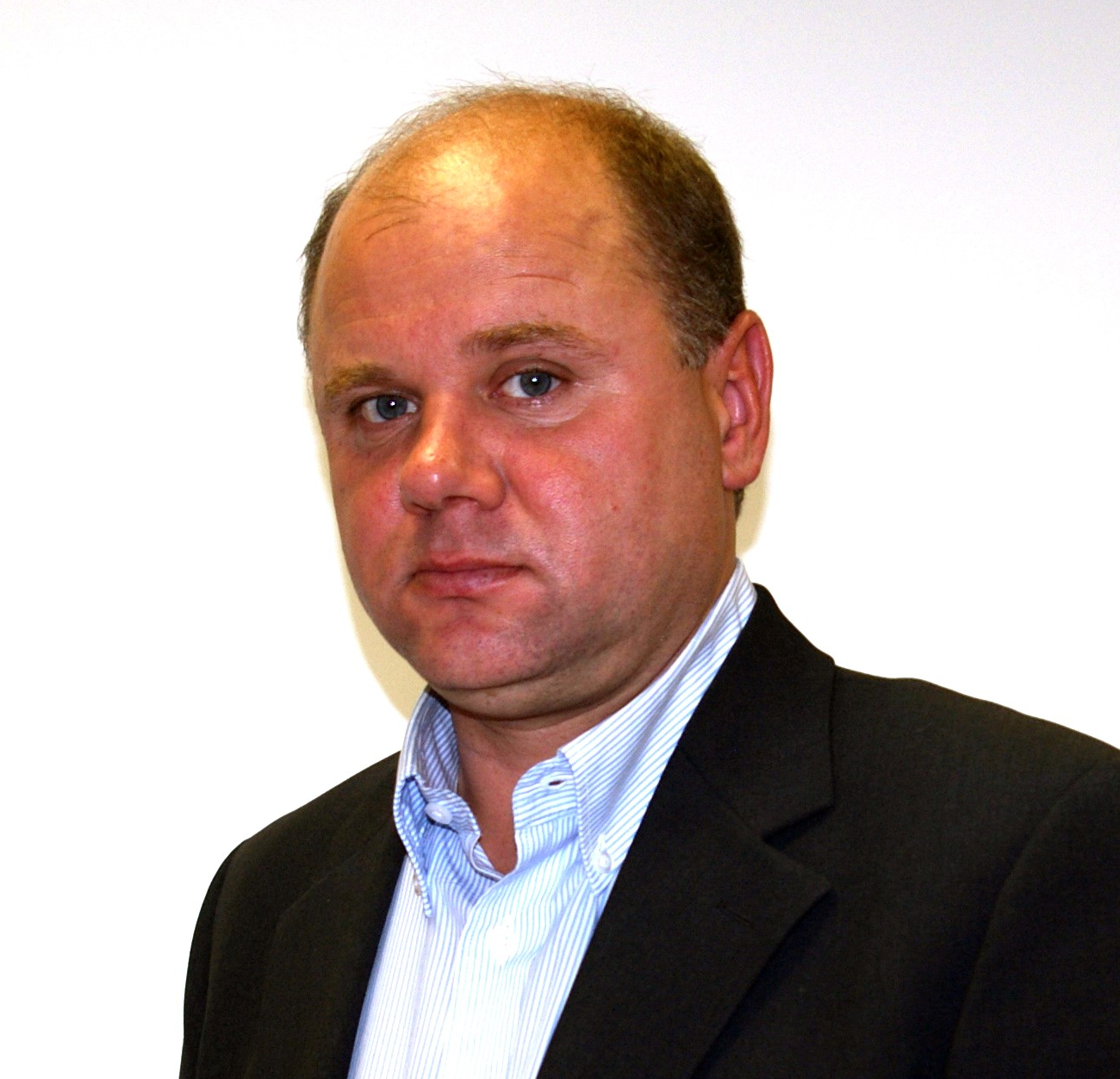
Christian Silvasti
Senior coach, board chair




Read why they use To Lead
“The To Lead Model brings greater precision to leadership development instead of one-off efforts. Bringing all the perspectives on leadership together gives a better portfolio of the development activities that are needed.”
Hans Knutsen
“The To Lead Model helps individuals and organisations build alignment on current leadership and on the activities that exist to develop leaders. With that alignment, it becomes easier to define a target picture for leadership and the practical activities needed to get there.”
Jonas Pettersson
“Through the model's eight areas, the picture of what is expected of leadership and its challenges becomes more complete than in other models I have seen. As a leader, you get a holistic view of where you are and what needs to be developed.”
Magnus Isaksson
“As a coach, I get a clear picture of the company's leadership and can work with the client to focus on the right development efforts.”
Christian Silvasti
“It is valuable to be able to work with more targeted leadership development based on the strengths and goals of individuals and the organisation, within the different areas of the model.”
Linnea Sjödin
“The model provides a clear structure that actually makes leadership development manageable and relevant in everyday work.”
Jan Granaas
“The To Lead Model allows me to quickly assess my clients' leadership strengths and growth opportunities and translate them into concrete development plans.”
Jordan Bedford
“I particularly like how the tool links leadership in different situations to concrete actions. It makes it easier to act straight away.”
Milena Andersson
Contact us
Want to see what it could look like for you?
Send us an email with a few lines about your situation, or give us a call – we look forward to hearing from you.
Follow us on LinkedIn